![]()
Nara was once a magnificent capital described by an ancient poet as “a fragrant flower in full bloom”. According to history, it was the first permanent of Japan established in the year 710 until the movement to Nagaoka took place in 784 when the government was seriously threatened by the growing influence and political aspiration of the city’s powerful Buddhist monasteries. However, due to the glorious Nara period, this city remains full of historic treasures which include some of Japan’s oldest Buddhist temples.
Geographically, Nara is now the capital city of Nara Prefecture in the Kansai region. It is located in the Kinai plain, less than one hour from Kyoto and Osaka. An ancient Japanese book entitled Nihon Shoki states that the name “Nara” was derived from the Japanese word narashita meaning “made flat”.
As Nara is well-known as the treasure-house of Japanese arts and the birthplace of the culture of Japan, it has been rated as one of the most rewarding tourist spots in the country. What you find here are the renowned ancient temples and shrines which reflect the timeless history of this archipelago.
The Magic of Nara
This culturally rich city keeps a fabulous poise between history and nature and thus becomes the cradle of Japanese culture as well as the spiritual home of the Japanese. From the settings to the atmosphere to its people, it’s from top to bottom different from what you feel in Tokyo. Indeed, you would find the thick compilation of fascinating and traditionally significant sites is the mirror to what its neighboring city Kyoto offers.
Having eight Unesco World Heritage sites reside peacefully in the city, specifically Todaiji, Saidaiji, Kofukuji, Kasuga Shrine, Gangoji, Yakushiji, Toshodaiji and Heijo Palace Remains, Nara is known as the second largest treasure-house of Japan’s cultural legacy after Kyoto. What is interesting here though is the similarity between the two neighboring cities; they are both drab at the first sight, but if you dig into the city you will be amazed by the rich history and its hidden beauty.
There was a significant point in history known as Tempyo Period wherein countless of the most inspiring Japanese artworks were produced and treasures were brought back from other countries. All these historical assets are the illustration of the cosmopolitan culture in that era, which is also known as Tempyo culture. They are now stored in Sosoin treasure house of Todaiji (literally means Eastern Great Temple). Other than that, Kofukuji, Yakushiji, Toshodaiji and the Kasuga Grand Shrine are also the settings where you can feel the rich, graceful atmosphere of the Tempyo Culture. A casual stroll through the walkways, a glance at the tiled roofs will bring you out of space, traversing through time to thousand years back and relive the old days.
However, history is just part of Nara’s immortal beautifulness. The aroma of the four seasons adds a sweet innocence to the charm of this ancient city. In the spring, cherry blossoms begin to bloom all over the temples and shrines outlining an enthralling landscape. If déjà vu strikes, you would probably have seen the picture in one of the old Japanese paintings stored in the treasure house. In the summer, holiday-makers flock to this ancient capital when the flourishing verdure is all over the roof tiles of the beaming temples and shrines.
Is that the end? No. The vivacious traditional events carried out throughout the year, from the Ceremonial Burning of Wakakusa-yama Hill (its furious flames lights up an evening sky in winter); to the Kasuga Grand Shrine Lantern Lighting Ritual (more than 3,000 stones and hanging bronze lanterns are all lit simultaneously), add so much colors to the already captivating ancient city.
Travel To Nara - Top 8 Best Places
To experience the most out of Nara ancient town, these are the places you don’t want to miss.
- Todaiji Temple - Large temple with a big Buddha statue. (The Power of Size)
- Horyuji Temple - The world’s oldest wooden buildings. (Visible Order)
- Kofukuji Temple - Family temple of the Fujiwara Clan. (The Open Temple)
- Kasuga Taisha - Nara’s most celebrated Shinto shrine. (Kasuga Grand Srine)
- Nara Park - Central city park with wild deer. (Tame Deer Park)
- Toshodaiji Temple - Large temple in western Nara. (A Time Machine)
- Yakushiji Temple - Large temple in western Nara. (The Beauty of New and Old)
- Murouji Temple - A hillside temple far from the center of Nara City. (Ryhthm, Ryhthm, Ryhthm)
Three Reasons Why I love Nara
May be it’s because I am the die-heart fan of the sweet and innocent Korean singer Jang Nara? I’m kidding. There are thousands of reasons people fall in love with this ancient city but I only have my top three reasons written here.
- Though I am a crazy shopper while travel in the shopping district but sometimes I think what is the point of going out control just to get some latest Zara clothing or a pair of new Nike sneakers when there are so many Zara and Nike outlets in my home country. A lot of people simply tend to be stingy at home but feel it’s reasonable to spend while travel. Nara is a spot where you don’t have to spend money to garner gratification; the value and beauty are not what money can buy.
- Nara is the birthplace of the history and culture of Japan. I wonder how many times, how many travel guide books have highlighted this same statement (though in different structure or vocabulary). That’s because it’s the essence of visiting Nara! Each entrance of the old temple or shrine is the portal to the ancient Japan; the entire town is a time machine for you to traverse through history. Though I hate history and more often than not failed the test in my high school (because that’s all about theory and memory!) I am totally in love with Nara because that’s more of a practical world.
- Besides history, it’s the setting that allures me. It’s moving when the exquisitely charming tranquility vaporizes into the thin air the moment the bell rings to mark the beginning of cherry blossoms festival. It’s awakening when the blaze of Ceremonial Burning of Wakakusa-yama Hill starts illuminating the evening sky of the innocent Nara in winter. Everything is nothing but elegant and artistic.
Sister Cities of Nara
This is the list of the cities around the world which have sister relationship with Nara.
In Japan
- Kōriyama, Fukushima
- Obama, Fukui
- Dazaifu, Fukuoka
Outside Japan
- Gyeongju, Korea
- Xi’an, China.
- Toledo, Spain
- Versailles, France
- Canberra, Australia

Nara

Nara flag

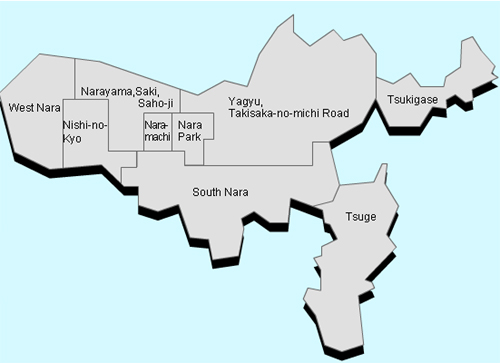
Nara map

Nara city map
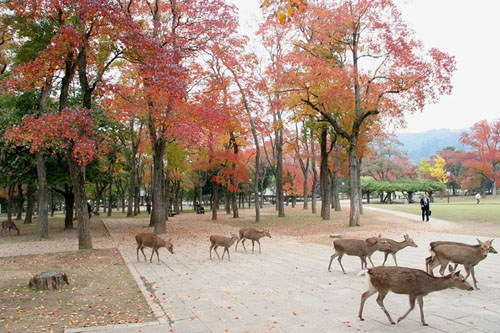
Deer roaming in central Nara among Sapium sebiferum trees

Horyuji Temple

Kasuga Taisha (Kasuga Grand Srine)
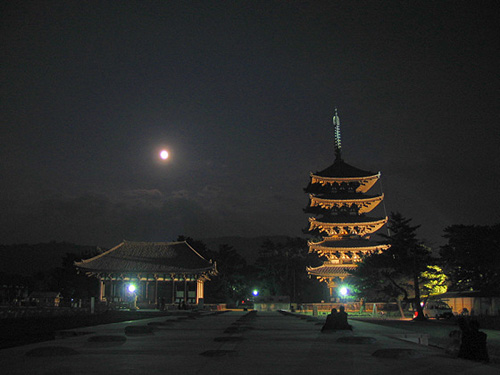
Kofukuji Temple
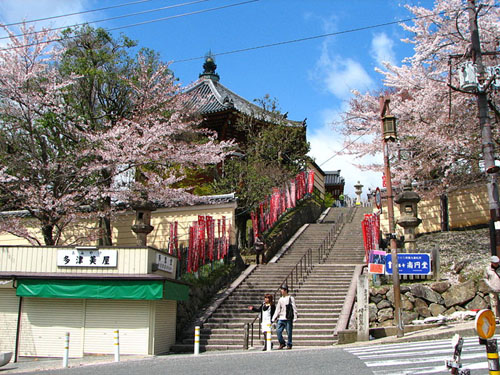
Nara Park
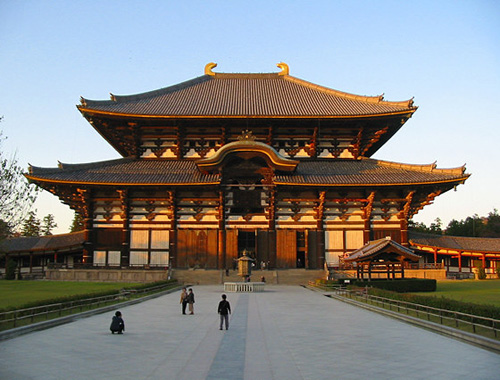
Todaiji Temple

Toshodaiji Temple

Yakushiji Temple