Kyoto is a beautiful city with an abundance of prewar buildings, such as the traditional townhouses known as machiya, nestled in the heart of it. It is located in the central part of the island of Honshu with a population close to 1.5 million.
It was once well-known as the imperial capital of Japan until the move of the government to Edo (later renamed to Tokyo) during the Imperial Restoration. In case you wonder if there is any link between Tokyo and Kyoto since the pronunciation of one is the vice versa of the other, reassure that there is no link between them. It is just so happened that Tokyo carries the meaning of Eastern Capital while Kyoto was once known for a short time as Saikyo which means Western Capital.
Though it is no longer the capital of the archipelago, it is still the capital for the major part of the Osaka-Kobe-Kyoto metropolitan area and Kyoto Prefecture itself. Due to its historic value, you are not experiencing the true Japan before you step into this city full of cultural heritage.
The magic of Kyoto
Being the seventh largest city of Japan with modern face, Kyoto was once destroyed by many wars and fires over the centuries. At the end of World War II, The United States put it in the list of the atomic bomb target cities considering that the population in this intellectual centre of Japan would have greater understanding of the significance of the lethal weapon. However, after weighing the thought with its historic value, Kyoto was removed from the list and spared from other air raids during that span. Hence, the countless temples, shrines and other historically invaluable structures survive in the city are highly appreciated today.
In other words, Kyoto is the warehouse of Japan’s priceless traditional culture on account that it was once the stage history was played out tremendously. If you are to say that Kyoto is one of the world’s most culturally rich cities on par with Paris, London and Rome, no one would shake his head in disagreement. If there is one, show him the list of 17 Unesco World Heritage sites, over 1600 Buddhist temples and more than 400 Shinto shrines which snuggle themselves peacefully in the heart of the historical city. Indeed, it is one of the dream cities for travelers with the sense and sensibility for artistic heritage. Thus, you find it in our top 3 best (I should say must-visit) places to visit in Japan.
The magic of Kyoto is even more mesmerizing when you really see the raked pebble gardens, poets’ huts hidden in the middle of bamboo groves, arcades of vermilion shrine gates, mysterious geisha dancing gracefully right before you in traditional restaurants, golden temples floating above still water. The sum of all these images makes up the slideshow in your imagination whenever you are to visualize Japan.
However, modernization has changed the façade of traditional Kyoto when newer architecture like Kyoto Station complex is built and the areas around are developed as part of the process. Hence, stepping out of Kyoto station for the first time could be feeling like falling from heaven to hell. Not that serious but the skyscrapers and suit-clad IT genius or businessmen walking around would really turn your expectation upside down. Be disappointed, but not hopeless as the true beauty of the city is not superficial that casual view would discover. It is hidden behind the walls, doors, curtains and facades which takes great patience, or even Japanese’s ganbaru (perseverance), to dig into the depth of the historical town and discover the bona fide exquisiteness. In fact, when you really understand how Japanese appreciate culture and beauty of life, you would find amazing things all over there.
Travel To Kyoto - Top 10 Best Places
Alright, so how far or deep you have to travel in order to see the exquisiteness of Kyoto? The answer is revealed in the list below which encompasses ten must-visit places with a short description attached to each attraction.
- Kinkakuji (Golden Pavilion) - Temple building covered in gold.
- Kiyomizudera - Temple famous for its large wooden terrace.
- Fushimi Inari Shrine - The ultimate torii gate experience.
- Sanjusangendo - Temple with 1001 human sized statues.
- Kokedera - Called moss temple because of its garden.
- Nijo Castle - Former Kyoto residence of the shogun.
- Ginkakuji (Silver Pavilion) - Beautiful temple not actually covered in silver.
- Arashiyama - Pleasant district at the outskirts of Kyoto.
- Katsura Villa - Imperial villa with stunning landscape garden.
- Shugakuin Villa - Imperial villa at the outskirts of Kyoto.
3 Reasons Why I Love Kyoto
I love travelling in Kyoto because I have been totally spellbound by the magic of the city.
- I might not be able to live that long until some genius scientists finally come out with the invention of time machine, but I don’t need one to travel to the past of Japan. It is as if Kyoto has come to life through the slider of time. Each torii gate is like a portal to the ancient Japan.
- It is said to be the final destination for travelers who know appreciate the immortality of artistic heritage, and I am one of those travelers who just expect so much from the traces of history.
- I don’t travel for sight-seeing but experiencing life and culture in the places I go. I love the fact that the beauty of Kyoto is not something superficial or something that could be seen by naked eyes. Here, I would have the chance to open up my heart and let things come in naturally. No worries for other travelers as it is a city full of attractions for you to leave your footsteps and weave some beautiful memories that last forever.
Sister Cities of Kyoto
These are the cities around the world which have sister relationship with Kyoto.
- Boston, United States
- Paris, France (Friendship Pledge city)
- Cologne, Germany
- Prague, Czech Republic
- Florence, Italy
- Kiev, Ukraine
- Xi’an, People’s Republic of China (Friendship city)
- Guadalajara, Mexico
- Zagreb, Croatia

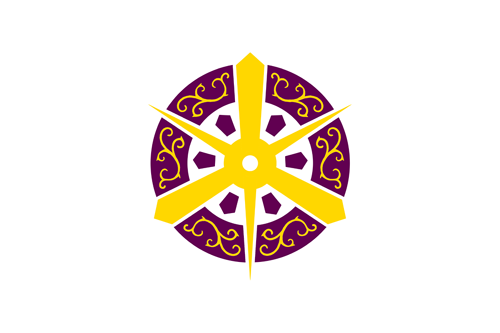
Kyoto flag

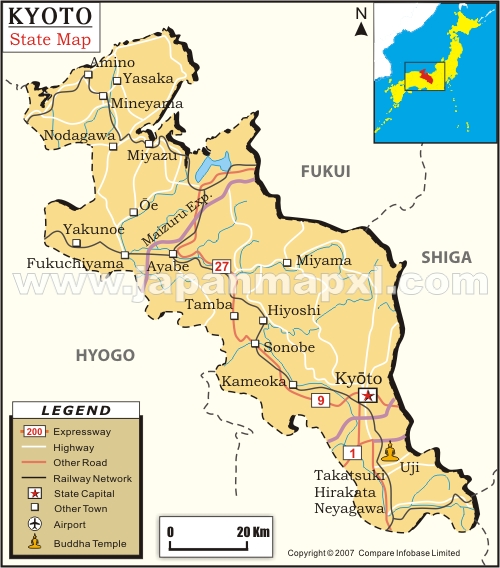
Kyoto map

Kyoto map 2

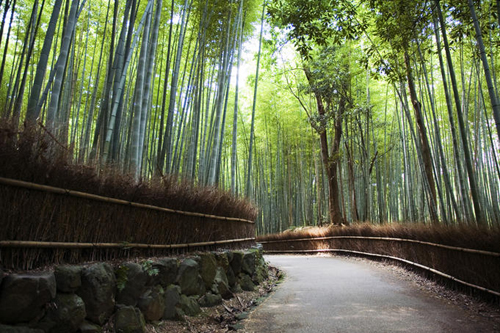
Bamboo forest walkway, Arashiyama district.

Daimon-ji Mountain during the fire festival.
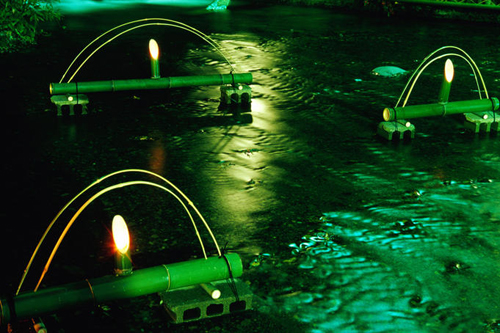
Decorations in river at Kibune.

Food and crafts adorn every street during the Gion matsuri.

Kinkakuji Temple, Kinkaku (Golden Pavilion)

Kiyomizudera

Nijo Castle

Paper lanterns light a wagon on the night before Gion Matsuri in Kyoto.
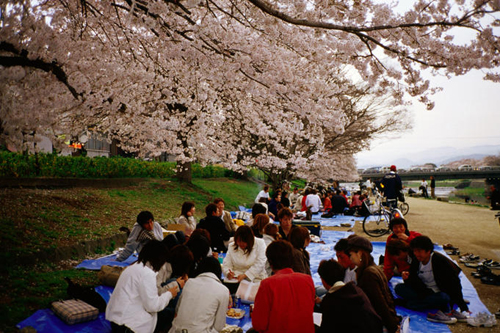
People having 'Hanami' cherry blossom party near Kamogawa River.

Tunnel of torii gates with inscriptions at Fushimi Inari Shrine.
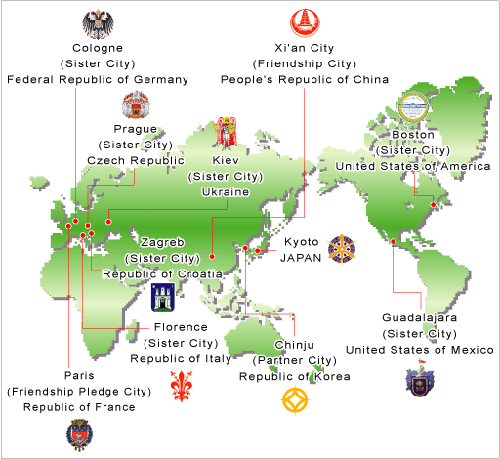
Sister cities of Kyoto